Storing Ayurvedic Staples Fresh: Fridge Organization for Better Nutrition
Anyone who cooks along Ayurvedic lines already knows that freshness is not a minor detail — it is part of the food’s value. Leafy greens, raw dairy, sprouted grains and freshly ground spices all carry more of their intended benefit when they are eaten close to the time they were harvested or prepared. The trouble is that most kitchens store all of this together in one cold box, without much thought about which shelf suits which ingredient. A few practical fridge organization tips can close that gap, turning a standard refrigerator into a space that actually protects the qualities these foods are chosen for in the first place. This article looks at why freshness carries so much weight in Ayurvedic thinking, which everyday foods degrade fastest once they leave the kitchen counter, and how to arrange a fridge so that vegetables, dairy and condiments each get the conditions they need.
TL;DR — Key Takeaways
- Ayurveda treats freshly prepared, minimally stored food as more vital than food that has sat for long periods, which is why fridge organization tips matter beyond simple food safety.
- Leafy greens, fresh herbs and unpasteurized dairy lose texture and flavor fastest, often within hours at room temperature.
- Separating crisper zones, dairy shelves and door compartments by how each food reacts to temperature swings keeps staples fresher for longer.
- Independent cooling zones for fresh and frozen food reduce moisture loss in delicate greens compared with a single shared compartment.
Why Freshness Matters in an Ayurvedic Diet
Ayurvedic nutrition rests on the idea that food carries more than calories and nutrients — it carries prana, a kind of vital energy that is considered strongest right after harvest or cooking and gradually fades the longer food sits. This is one reason Ayurvedic guidance leans so heavily toward seasonal, freshly prepared meals rather than food made in bulk and reheated over several days. The reasoning is not only philosophical; it lines up with something anyone can observe in a kitchen. A vegetable pulled from the garden that morning simply tastes different from one that has been sitting for a week.
Part of that difference comes down to oxidation. Once a leaf is cut or a root vegetable is peeled, its surface is exposed to air, and enzymes inside the plant begin breaking down compounds that give it color, crunch and aroma. Cold storage slows this process by reducing the rate at which those enzymes work, but it does not stop it entirely. The same holds true for dairy: fresh milk or paneer left at warmer temperatures continues to develop bacterial activity that changes both taste and texture, moving it away from the mild, sweet profile that Ayurvedic recipes usually call for. Understanding this decline is what makes storage a genuine extension of Ayurvedic cooking practice rather than a separate, purely logistical concern.
Foods That Lose Nutrients Fastest Without Proper Cooling
Not every ingredient degrades at the same speed, and knowing which ones are most fragile helps prioritize where cooling effort actually pays off. Leafy greens and fresh herbs sit at the top of that list. Coriander, mint, fenugreek leaves and similar greens are made mostly of water held in thin cell walls, so once they are cut and exposed to warm air, they wilt within a matter of hours. The wilting itself is a sign of water loss, but it also signals that the delicate compounds Ayurvedic cooking values in these greens are breaking down alongside the moisture.
Dairy items behave differently but are just as time-sensitive. Milk and fresh paneer sour quickly once they warm even slightly beyond refrigerator temperature, because the bacteria naturally present in dairy multiply faster as the surrounding warmth increases. That souring is not simply a flavor issue; from an Ayurvedic standpoint, dairy that has turned is treated as having lost the qualities that made it suitable for the recipes it was intended for, whether that is a simple glass of warm milk or a lightly spiced curd preparation.
Greens with an especially high water content and delicate leaf structure, such as moringa, deserve particular attention right after purchase. Because their leaves bruise and lose turgor pressure easily, waiting even a short while before refrigeration accelerates the same wilting and nutrient breakdown seen in other leafy vegetables, only faster. A practical habit is to treat these greens as a first priority when unpacking groceries, cooling them before slower-moving items like root vegetables or grains ever reach the fridge.
Organizing Your Fridge for Ayurvedic Staples
A kitchen built around Ayurvedic staples benefits from treating the fridge as a set of distinct microclimates rather than one uniform cold space. Leafy vegetables and root vegetables, for instance, have different moisture needs: leafy greens do better in a slightly more humid crisper drawer that slows wilting, while roots like carrots, beets and ginger tolerate a drier environment and store longer without turning soft. Keeping these two groups in separate drawers, rather than piled into a single vegetable bin, reduces the chance that moisture from one group speeds up spoilage in the other.
Door shelves are best reserved for items that can handle small temperature swings every time the door opens, since that zone is naturally the warmest part of the cabinet. Condiments, pickles and ghee generally fall into this category, since ghee in particular is stable enough to tolerate some temperature variation without losing its consistency. Dairy that spoils quickly, on the other hand, belongs on an interior shelf rather than the door, where the cooling is steadier and less affected by how often the fridge is opened. Approaching the fridge this way — matching each staple to the zone that suits its sensitivity rather than defaulting to whatever shelf is empty — turns the appliance from a single cold box into a set of conditions that actually match what Ayurvedic cooking depends on.
Choosing Storage That Matches Your Kitchen Habits
Once the internal layout is sorted, the fridge itself becomes the next variable worth considering, particularly for households that keep both a steady supply of fresh produce and a stock of frozen items on hand. A double door fridge keeps refrigeration and freezing on separate compartments with their own cooling cycles, which means the temperature holding fresh vegetables and dairy steady does not have to compete with the defrost cycles that a freezer section runs on its own schedule. In a single-door unit, by contrast, both functions often share one internal airflow, so every frost cycle that services the freezer also touches the fresh-food side of the cabinet.
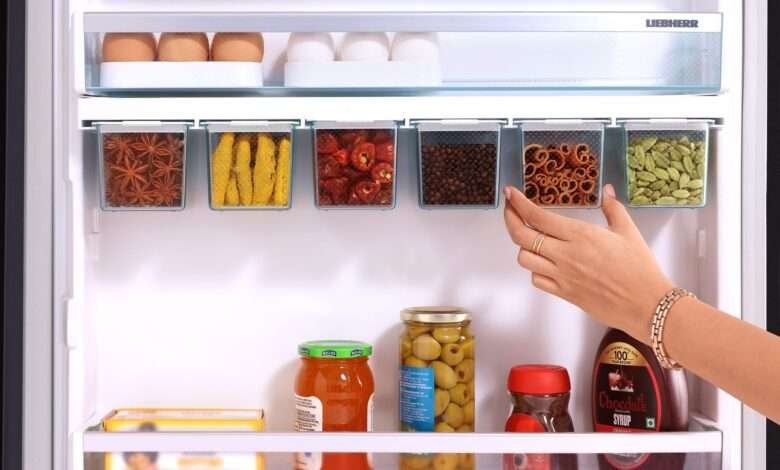
Liebherr’s Spice Box, built for Indian kitchens, uses an airtight silicone seal so whole spices keep their aroma instead of drying out or scenting nearby food.
That shared airflow matters more than it might seem for delicate greens. Frost cycles pull moisture out of the air inside the cabinet as part of how they manage ice buildup, and when fresh and frozen storage share that airflow, leafy vegetables and herbs sitting nearby lose water faster than they would in a compartment that is cooled independently. Keeping the two functions on separate circuits is one of the more practical reasons kitchens that lean heavily on fresh, Ayurvedic-style ingredients tend to notice less wilting and drying out in their vegetable drawers over the course of a week.
None of this replaces good habits around buying only what will be used soon and checking drawers regularly, but the equipment sets the baseline. A layout that keeps humidity, temperature and airflow distinct across zones supports the same freshness goals as good buying habits, letting Ayurvedic staples hold their quality for as long as reasonably possible.
Frequently Asked Questions (FAQ)
Should ghee be refrigerated or kept at room temperature?
Ghee is stable enough that many households keep a small working portion at room temperature for daily use, since its low moisture content makes it less prone to the bacterial spoilage that affects fresh dairy. A larger reserve benefits from cooler storage, which slows the gradual oxidation that can dull its aroma over time, though this is a matter of preference and kitchen conditions rather than a strict requirement.
How long do soaked grains or sprouts stay fresh once refrigerated?
Soaked grains and sprouts stay usable for a noticeably shorter window than dry staples because soaking activates enzymes and introduces moisture that supports microbial growth. Rinsing them before refrigerating and keeping them in a container that allows some airflow helps slow this process, but they are best treated as a short-turnaround item rather than something to stock up on for extended periods.
Does refrigeration destroy the prana or vital quality Ayurveda associates with fresh food?
Refrigeration itself is not treated as removing this quality; rather, Ayurvedic guidance sees prolonged storage and repeated reheating as the bigger factors that diminish it. Proper cooling is generally viewed as a way to slow the natural decline that happens after harvest or preparation, not as something separate from or opposed to the emphasis on freshness.



One Comment